
Weeks 1–2
Pain
Settle the symptoms first.
Dizziness, pain and stiffness get calmed down so you can move without bracing, starting your very first visit.
What We Treat
Feeling unsteady is not simply part of getting older. Balance is a system: inner ear, vision, strength and reflex timing, all working together. Any one of them can be trained, so we test all four before we start.
Sound Familiar?
Two or more? Keep reading.
Why It Happens
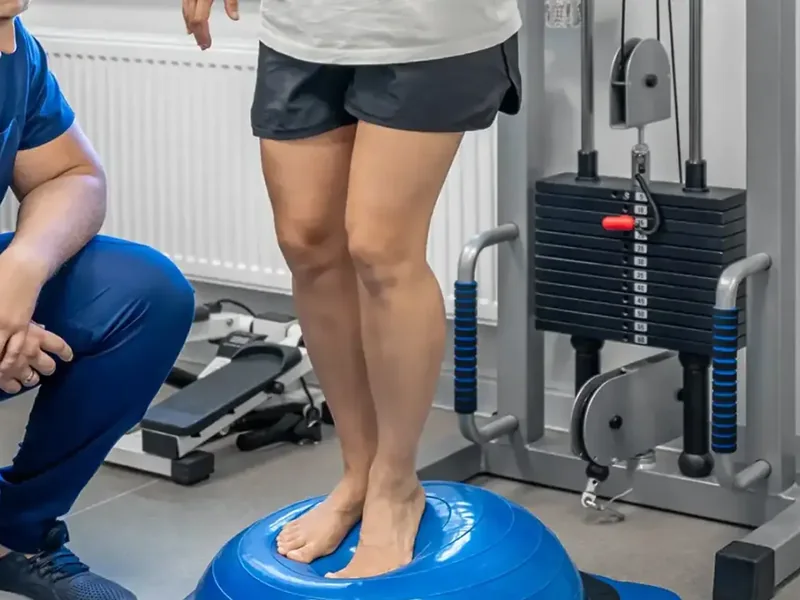
Balance is not one thing you either have or lose. Your inner ear reports which way is up. Your eyes confirm it. Your hips and legs supply the strength to hold a position. Your reflexes supply the timing to catch a stumble. When one of the four falls behind, the other three cover for it. Covering is tiring, and it is usually the moment walking starts taking concentration.
Which system is behind it is a testable question, not a guess. Ajay Kalola is a specialty-trained vestibular therapist, and a cause-first evaluation checks all four systems plus the way you walk. Balance and gait are connected: a problem in one almost always shows up in the other. You’ve spent months being careful instead of complaining about it. Careful is a good instinct. It just isn’t a plan.
The Honest Truth
Nobody regrets starting too early. Every week, someone in our clinic says they regret waiting.
How We Fix It
Every plan has an endpoint. Here’s what the four phases look like for balance therapy.
Weeks 1–2
Pain
Dizziness, pain and stiffness get calmed down so you can move without bracing, starting your very first visit.
Weeks 2–6
Prime
Inner ear and vision work, plus motion in the hips and ankles, sharpen the inputs your balance runs on.
Weeks 6–10
Perform
Legs get stronger and reflexes get quicker, trained through real walking, turning and stepping.
Weeks 10+
Prevent
Curbs, stairs, dark hallways and crowded aisles get practiced before you finish: that’s the endpoint, not just another appointment.
Aj was my physical therapist, and he helped me get started to bring back my mobility and muscle mass and help with balance and strength! He was very patient and polite.
Shared by Debra A. · Balance and strength
Visit one: a hand on the wall, and a list of places you avoid
The endpoint: stairs, turns and curbs you’ve already practiced
Questions, Answered
Usually not, and it is rarely the first step. Imaging is good at showing structure and poor at explaining why you feel unsteady. Balance is a performance problem, so it has to be tested rather than photographed. We start with a hands-on evaluation of the inner ear, vision, strength and reflex timing. If your case needs a physician or imaging, we will say so plainly and help you get there.
Yes, because it is supervised and graded. You are one-on-one with your licensed therapist for the whole visit, every visit, never sent off to figure it out alone. We start at a level you can hold, then make it harder only once you have earned it. The point is to challenge your balance somewhere a wobble costs you nothing.
That depends on what the evaluation finds, and you will not be left guessing. Your plan runs through four phases: Pain, Prime, Perform and Prevent. You leave visit one knowing what yours looks like, and you always know which phase you are in and what is left. That is a plan with an endpoint, not an open tab of appointments. New Jersey has direct access, so no referral is needed to start. We are in network with most major plans including Medicare, and we verify your benefits before your first visit.
Book Your Visit
Request a time and a real person calls you back. No phone tree. No ‘someone will reach out.’ Just a plan.
5.0 · 231+ Google reviews
Typical response: under 2 business hours
Step 1 of 5
That’s the hard part done. We’ll call during business hours to lock in your time, including early mornings, two evenings a week and Saturday mornings.
Visit Us